Material

Zirconia Ceramics

Yttria-stabilised zirconia (Y-TZP) is the toughest of the oxide ceramics, with fracture toughness reaching 8–10 MPa·m^1/2 and flexural strength up to 1200 MPa. That combination lets it survive impact and…

Zirconia Ceramics

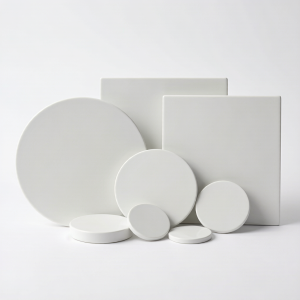
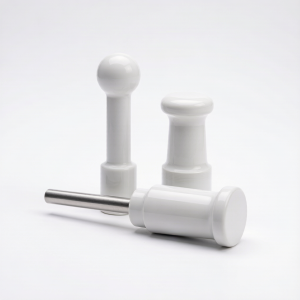
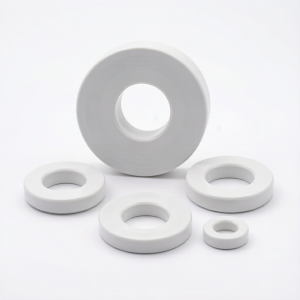
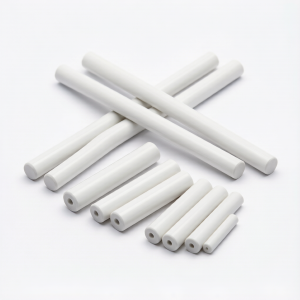
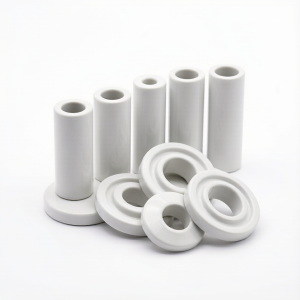
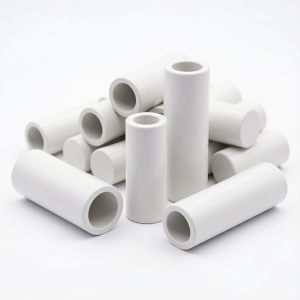
Yttria-stabilised zirconia (Y-TZP) is the toughest of the oxide ceramics, with fracture toughness reaching 8–10 MPa·m^1/2 and flexural strength up to 1200 MPa. That combination lets it survive impact and side-loading that would shatter alumina or silicon carbide, which is why it shows up in knife blades, pump sleeves, ball heads and any application where a ceramic part takes mechanical abuse.

Zirconia also carries the lowest thermal conductivity of the structural ceramics discussed here (2–3 W/m·K), making it a natural thermal barrier. Its density (~6 g/cm³) is higher than alumina, so weight-sensitive designs favour lighter alternatives, but when toughness is the deciding factor zirconia is usually the answer.
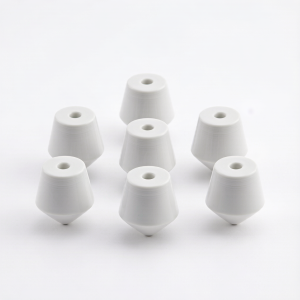
Typical Properties

Indicative ranges — confirm grade and test conditions before design commitment.

PropertyIndicative Value
CompositionYttria-stabilised zirconia (Y-TZP)
Density6.00-6.05 g/cm3
Vickers hardness1200-1350 HV
Flexural strength900-1200 MPa
Fracture toughness8-10 MPa.m1/2
Max. service temperature800-1000 C
Thermal conductivity2-3 W/m.K
Thermal expansion (20-1000 C)10.0 x10⁻⁶/K
Potential Advantages

Highest fracture toughness among engineering oxides; excellent wear resistance in sliding contact; can be polished to an optical-quality surface finish; good biocompatibility for medical implants.

Design Considerations

Stabiliser grade (yttria content) determines both toughness and maximum service temperature — 3 mol% Y-TZP offers the best room-temperature strength but begins to degrade above ~800 °C. For higher temperature duty consider partially stabilised zirconia (PSZ) or switch to SiC/Si₃N₄.

Limitations & Trade-offs

Low-temperature degradation (LTD) in moisture between 200–300 °C limits long-term use in steam or wet environments unless the grade is specifically LTD-resistant. Not suitable as an electrical insulator in some formulations — confirm resistivity if dielectric isolation is required.